






Andrei Vasilyevich Khrulev (pronounced as “Khrulyov”) is the creator of the modern concept of the rear service security system which includes merging the traditional intendance (equipment and food supply), logistical and technical support, financing, military construction, military communications (rail transport), military medicine, armoured vehicle and barrack administration, receiving and storing logistical resources, supplied by lend-lease, and etc. into the unified system of the Rear Services of the Armed Forces of the USSR.
Khrulev was Head of Main Intendant Directorate of the Red Army (1939-1941), deputy chief of People’s Commissar of Defence of the USSR and Head of Main Directorate of the Rear Services of the Red Army (from 1941), People’s Commissar of Railways of the USSR (1942-1943), Head of the Rear Services of the Soviet Army (1943-1950).
Under Khrulev’s direct management the uniform as well as many decorations including the orders of the Patriotic War, the Victory, the Glory, Suvorov, Kutuzov and others were developed. He also took part in the rehabilitation of the victims of Stalin’s repressions and supported the families of the repressed.
General of the Army A.V. Khrulev’s Decorations of the USSR and other countries

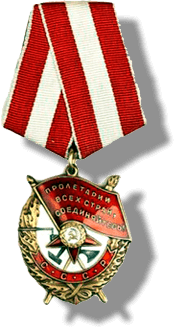
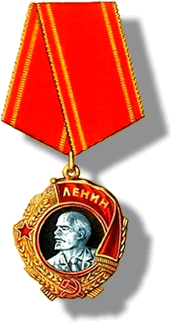
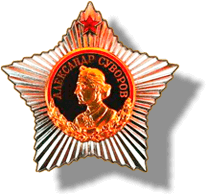
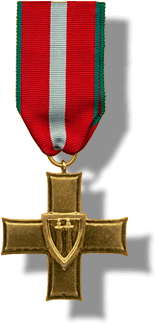

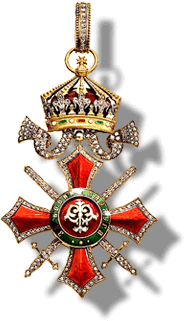


Click on the order for more information
Andrei Vasilyevich Khrulev was born on September 30, 1982 (O.S. September 18) in the village of Bolshaya Aleksandrovka of Yamburgsky Uyezd of the Saint Petersburg Governate (present Kingiseppsky District of Leningrad Oblast). His father, Vasily Vasilyevich Khrulev, was a blacksmith’s striker and later a blacksmith at the Putilov Plant; his mother, Maria Ivanovna, was a peasant.
Upon graduating from a provincial (zemstvo) school (1903) Khrulev became a disciple and later an apprentice in a goldsmith workshop (1903-1912). He then completed evening courses of general education obtaining the title of a people’s teacher and graduated from an evening school of public taskmasters (1911).
In 1912-1914 he was exiled to Estonia for revolutionary activities and in 1915-1917 he worked as a maintenance mechanic at the Okhtinskaya Gunpowder Plant. He was a secretary of the plant’s committee and a member of the Porokhovsky District Council (1917). He started military service in 1918. During the Civil war Khrulev was a Red Army man, a commandant at the Porokhovsky district commandant’s office of the revolutionary security service in Petrograd (1919), an assistant to the director of the political department and the director of the political department of the 11th cavalry division of the 1st Cavalry Army (1919-1921).
News

2017 is the year to commemorate General of the Army A.V. Khrulev
Under the resolution of the A.V. Khrulev Military Academy for Logistics chief Lieutenant General Andrei Toporov the year of 2017 has been announced the year to commemorate the great intendant General of the Army Andrei Vasilyevich Khrulev. In regard to the upcoming 125th birthday anniversary of the chief of the Main directorate of the rear services of the Red Army Khrulev, in the year of his 125th birthday the Academy will organize a number of commemorative events....
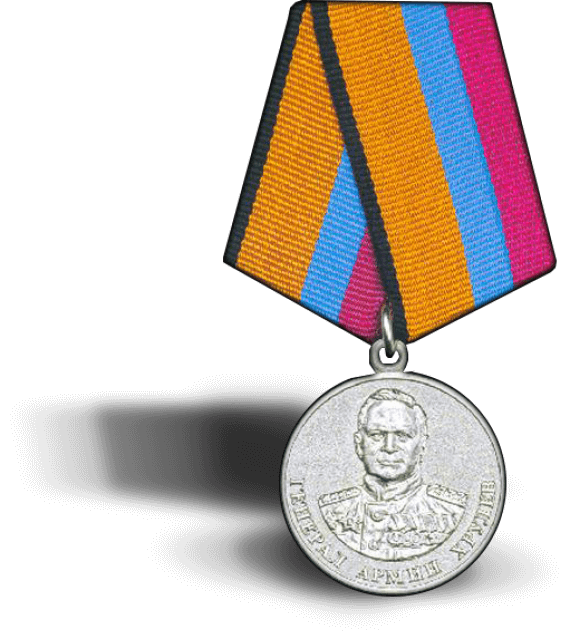
On July 10, 2004 in honor of Andrei Vasilyevich Khrulev a new medal was instituted in Russia called “General of the Army Khrulev” with Khrulev’s portrait and the inscription reading “No Victory without the Rear”
In the hardest days of the war, when the front line was near Krasnaya Polyana, within cannon shot of Moscow, Khrulev was one of Stalin’s deputies in the government who did not recommend him leaving Moscow as planned under a secret resolution. “On these hard days Beria, Malenkov and Kaganovich were going out of their way to convince Stalin to leave Moscow,” Khrulev remembered.
At the end of the war the front commanders at the headquarters asked Stalin to photograph with them. After everyone had taken their seats around the Supreme commander it turned out that there was no chair for the chief of the Rear services, General of the Army Khrulev. “One moment”, Stalin said. He went out of the room and came back carrying a chair in his hands: “Do sit down, comrade Khrulev!”
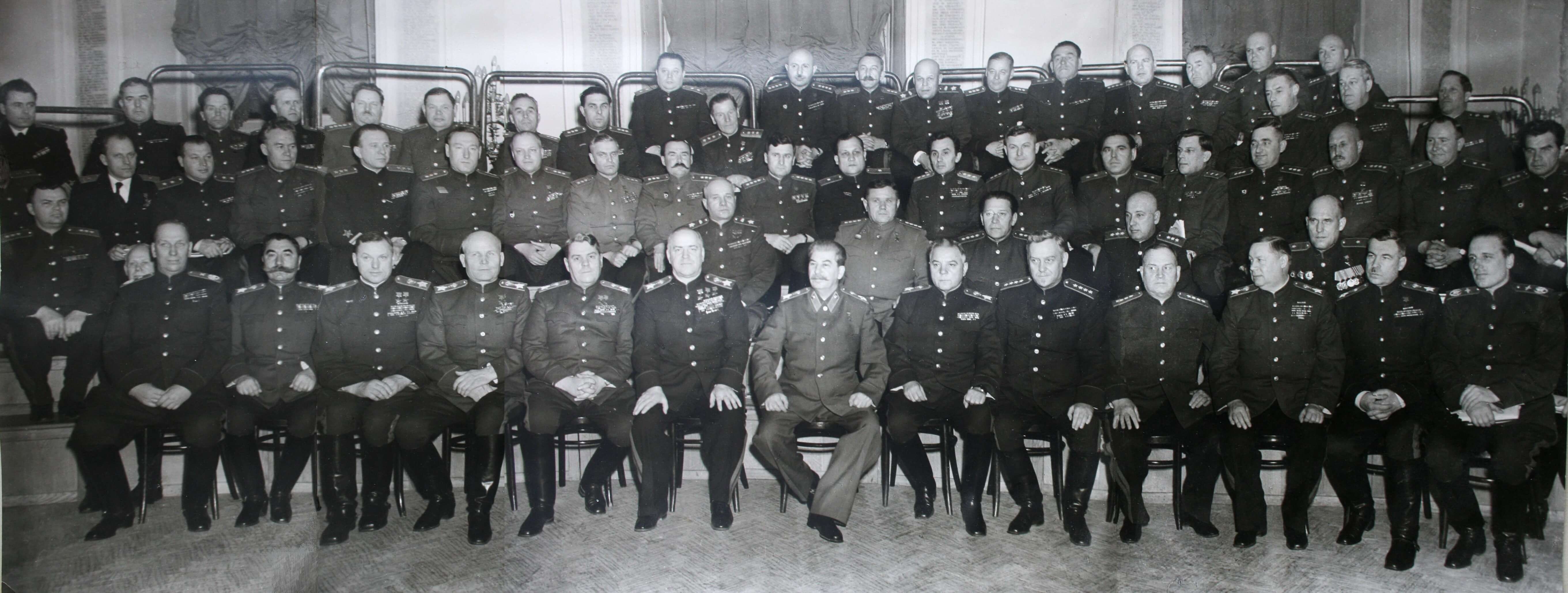
J.V. Stalin with the group of marshals, generals and admirals
General of the Army A.V. Khrulev is the 3rd to the right of Stalin in the first row
Photograph for the “Ogoniok” magazine, March 1946
FIRST ROW (from left to right):
Chief Marshal of the artillery N.N. Voronov,
Marshal of the Soviet Union S.M. Budyonny,
Marshal of the Soviet Union K.K. Rokossovsky,
Marshal of the Soviet Union I.S. Konev,
Marshal of the Soviet Union A.M. Vasilevsky,
Marshal of the Soviet Union G.K. Zhukov,
Generalissimus of the Soviet Union J.V. Stalin,
Marshal of the Soviet Union K.E. Voroshilov,
General of the Army N.A. Bulganin,
General of the Army A.V. Khrulev,
Marshal of the Soviet Union F.I. Tolbukhin,
Marshal of the Soviet Union L.A. Govorov,
Chief Marshal of the aviation A.E. Golovanov,
Admiral F.S. Oktyabrskiy,
Marshal of the armoured troops Y.N. Fedorenko;
in the back: Major General of the engineering and artillery service V.A. Degtyaryov,
Marshal of the armoured
troops S.I. Bogdanov,
General of the Army A.I. Eryomenko,
General of the Army M.A. Purkaev,
Colonel General P.A. Kurochkin,
Major General of the engineering and artillery service F.F. Petrov.
SECOND ROW: Rear-admiral N.V. Antonov,
Lieutenant General V.Y. Klokov,
Colonel General of the aviation K.A. Vershinin,
Admiral V.F. Tributs,
Colonel General S.S. Biryuzov,
Colonel General K.N. Galitsky,
Colonel General of the artillery V.I. Kazakov,
Colonel General M.I. Kazakov,
General of the aviation V.D. Sokolovsky,
Major General A.A. Lobachyov,
Colonel General K.S. Moskalenko,
Colonel General A.S. Zheltov,
Lieutenant General I.S. Anoshin,
Lieutenant General V.N. Kurdyumov,
Colonel General V.I. Chuikov,
Colonel General I.T. Grishin.
THIRD ROW: Admiral I.S. Yumashev,
Colonel General P.I. Batov,
Colonel General of the aviation S.I. Rudenko,
General of the Army I.V. Tyulenev,
Colonel General V.S. Popov,
Colonel General V.N. Gordov,
Colonel General of the tank troops I.Z. Susaykov,
Lieutenant General V.E. Makarov,
Colonel General A.V. Gorbatov,
General of the Army I.K. Bagramyan,
Colonel General P.A. Belov,
Marshal of the armoured troops P.S. Rybalko,
Colonel General P.L. Romarenko,
Lieutenant General I.K. Smirnov,
General of the Army G.F. Zakharov,
Colonel General V.I. Kuznetsov,
Colonel General D.N. Gusev,
Colonel General M.M. Popov,
Colonel General D.D. Lelyushenko,
Colonel General V.A. Yushkevich,
Marshal of the signal troops I.T. Peresylkin.
